
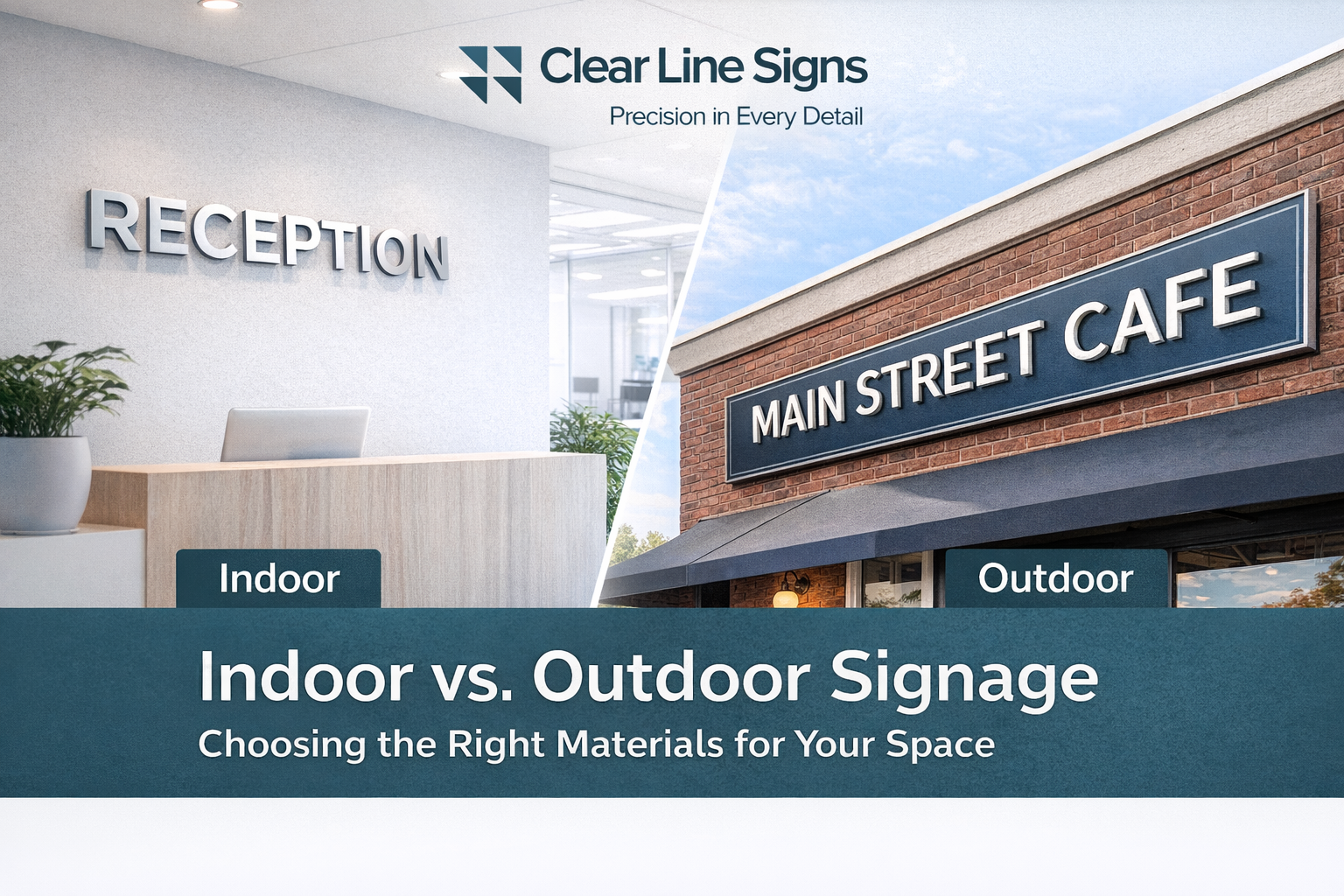
When planning signage for your business, one of the most important decisions is choosing whether your sign will be used indoors or outdoors. While some signs may look similar at first glance, the materials, construction, and finishes required for each environment are very different.
Choosing the wrong material can lead to fading, warping, or premature failure. This guide breaks down the key differences between indoor and outdoor signage to help you make the right choice from the start.
What Is Indoor Signage?
Indoor signage is designed for controlled environments where weather exposure is not a concern. These signs focus on appearance, branding, and customer experience rather than extreme durability.
Common indoor signage includes:
- Lobby and reception signs
- Office wall graphics
- Directional signs
- Trade show and event displays
- Retail interior branding
Popular Indoor Sign Materials
- Flat vinyl graphics for walls and windows
- Acrylic letters for clean, modern branding
- Fabric displays for trade shows and events
- PVC or foam board signs for temporary use
Indoor signs allow for more design flexibility, finer detail, and lighter materials.
What Is Outdoor Signage?
Outdoor signage must withstand sun, wind, rain, and temperature changes. Durability and visibility are the top priorities.
Common outdoor signage includes:
- Storefront signs
- Building-mounted signage
- Banners and street graphics
- Real estate signs
- Construction and site signage
Popular Outdoor Sign Materials
- Aluminum composite (ACM) panels
- Dimensional letters (metal or acrylic)
- Vinyl banners (standard, mesh, or backlit)
- Coroplast signs for short-term outdoor use
Outdoor materials are selected for weather resistance, UV protection, and long-term performance.
Key Differences Between Indoor and Outdoor Signage
Durability
Indoor signage prioritizes aesthetics, while outdoor signage must handle constant exposure to the elements.
Visibility
Outdoor signs often require larger sizing, higher contrast, and sometimes illumination to remain visible from a distance.
Material Thickness
Outdoor signs are typically thicker and more rigid to prevent bending or damage over time.
Lifespan
Indoor signs can last many years with minimal wear, while outdoor signs are engineered to maintain appearance despite harsh conditions.
Installation Considerations
Indoor installations usually involve:
- Wall mounting
- Adhesive vinyl application
- Lightweight hardware
Outdoor installations may require:
- Structural mounting
- Ground stakes or posts
- Permits or code compliance
- Weather-rated fasteners
Planning installation early helps avoid delays and unexpected costs.
Common Mistakes to Avoid
- Using indoor vinyl outdoors
- Undersizing exterior signs
- Ignoring wind load for banners
- Choosing materials based on appearance alone
Each environment demands the right material choice to protect your investment.
Choosing the Right Sign for Your Business
The best signage solution depends on:
- Location (indoor vs. outdoor)
- Duration (temporary or permanent)
- Budget
- Branding goals
A well-chosen sign enhances visibility, reinforces your brand, and delivers long-term value.
Need Help Choosing the Right Sign?
Every business is different, and the right signage depends on your space, goals, and environment.
If you’re planning a new sign or upgrading an existing one, Clear Line Signs can help you select a solution that’s clear, durable, and built to make an impact.