
Commercial teams often ask the same question when evaluating a signage partner:
What does commercial signage actually cost?
Commercial signage pricing depends on monument sign construction, ADA compliance requirements, installation complexity, and permitting timelines — especially in regulated markets like the Bay Area.
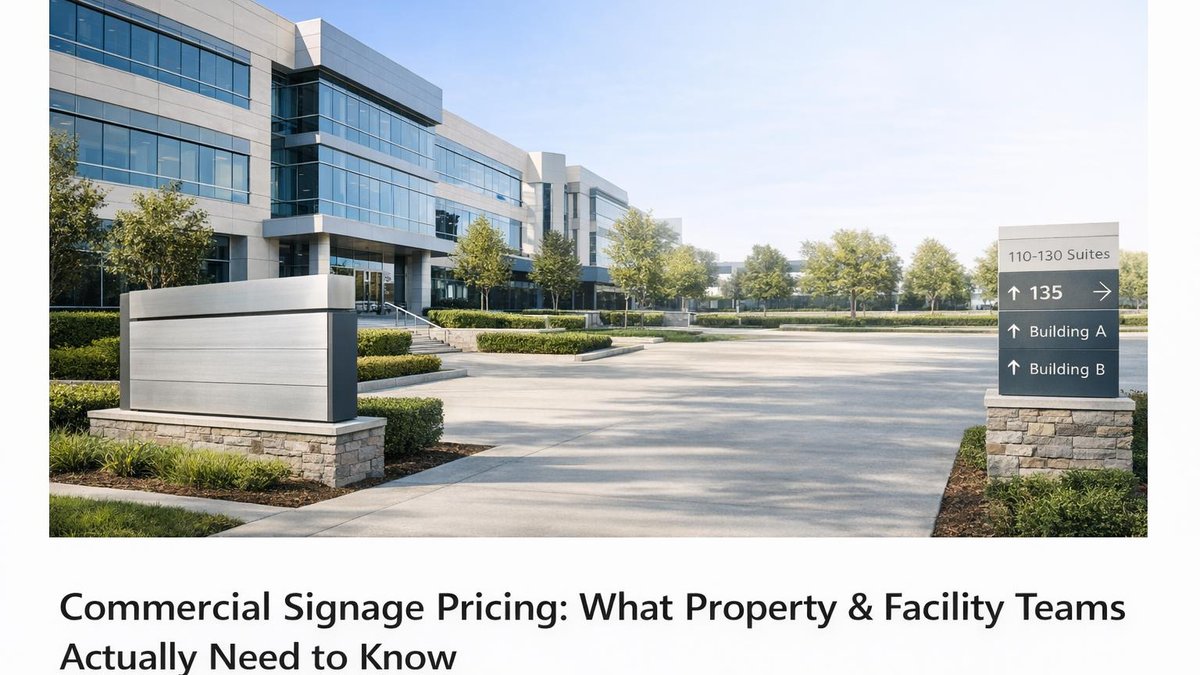
This guide explains what drives commercial signage pricing and how to budget confidently for 2026 projects.
Commercial Signage Is Infrastructure — Not Retail
A low-cost vinyl banner and an engineered monument sign for a multi-tenant campus are completely different categories.
Commercial signage pricing is typically driven by:
- Structural engineering requirements
- Materials and fabrication standards
- ADA compliance regulations
- Site conditions and access
- Installation logistics
- Municipal permitting and inspections
- Project timeline urgency
For property managers and commercial owners, the goal isn’t “cheap.”
The goal is correct, compliant, durable, and aligned with long-term asset value.
1. Monument Sign Cost Factors
Monument signs are permanent exterior structures and often require engineering review and city approval.
Pricing depends on:
- Concrete or masonry base construction
- Aluminum or steel sign cabinet fabrication
- Dimensional or illuminated lettering
- Powder coating or specialty finishes
- Structural reinforcement
- Electrical wiring (if illuminated)
- Engineering drawings
- Permit coordination
- Professional installation
Typical Cost Context
Smaller monument projects may begin in the mid-to-high five figures depending on scope. Engineered multi-tenant campus monuments can scale higher based on structural and permitting complexity.
In the Bay Area, permitting timelines and engineering review can influence total monument sign cost as much as materials.
2. ADA Signage Pricing & Compliance Requirements
ADA signage is regulated. It’s not decorative.
ADA-compliant signs must meet:
- Tactile character specifications
- Grade 2 braille requirements
- Letter height and spacing rules
- Contrast standards
- Mounting height regulations
Incorrect ADA signage can expose properties to compliance risk.
What Impacts ADA Signage Cost?
- Material (acrylic, photopolymer, metal)
- Quantity (room count, directional systems)
- Custom branding finishes
- Installation requirements
Interior ADA signage packages often start in the low thousands depending on quantity and customization.
3. Building-Mounted Dimensional Letter Pricing
Exterior building signage pricing depends on:
- Letter size and thickness
- Fabricated vs flat-cut letters
- Illuminated vs non-illuminated
- Mounting surface (concrete, metal panel, glass)
- Lift or equipment access
- Electrical routing (if applicable)
- Permitting and landlord approval
Commercial sign installation cost increases when:
- Equipment rental is required
- Access is restricted
- Installation must occur after-hours
- Multiple buildings are involved
4. Installation Complexity & Site Conditions
Installation pricing varies based on:
- Wall composition
- Mounting height
- Structural anchoring needs
- Interior vs exterior placement
- Access limitations
- Multi-day scheduling requirements
In biotech and corporate campuses, minimizing disruption is often more important than minimizing cost.
5. Permits, Engineering & Municipal Review
Exterior signage — especially monument and illuminated signs — may require:
- Structural engineering drawings
- Electrical review
- Planning department approval
- City inspection coordination
- Engineering stamps
Permitting timelines in San Jose and surrounding Bay Area cities can extend schedules if not planned early.
Structured Commercial Signage Pricing Categories
At Clear Line Signs, projects typically fall into three common categories:
Tier 1: Interior Signage Systems
- ADA room identification signs
- Directional signage
- Lobby dimensional letters
Tier 2: Exterior Building Signage
- Building-mounted dimensional letters
- Channel letters
- Window graphics
Tier 3: Monument Sign Projects
- Structural base construction
- Fabricated sign face
- Engineering documentation
- Permitting coordination
- Professional installation
Monument signage should be planned like a capital improvement — not a quick purchase.
How to Budget for Commercial Signage in 2026
If you’re planning:
- A monument sign upgrade
- ADA compliance modernization
- Exterior building signage
- New construction or redevelopment
Plan for:
- Permitting lead time
- Engineering review
- Fabrication scheduling
- Coordinated installation windows
Signage is often the final visible element of a project — but it should never be the last item planned.
Final Thoughts
Professional signage improves:
- Brand presence
- Wayfinding
- ADA compliance
- Property value perception
Clear Line Signs works with property managers, biotech campuses, and construction teams in the Bay Area and nationally.
Explore More
- Monument Signs: Combining Acrylic Panels and Dimensional Letters
- Choosing the Right Exterior Sign for Your Business
- Indoor vs Outdoor Signage Materials
Ready to discuss a project?
Clear Line Signs helps commercial teams plan signage that’s clear, compliant, and built to last.